Healthy Snacks for Little Kids: What Parents Are Talking About Right Now
Walk down any grocery aisle and you will see it. Bright cereal boxes, neon fruit snacks, and juice pouches in every color. For years, most of us never gave it a second thought. But this year, food has become one of the biggest topics in parenting circles. Parents are reading labels more closely, asking about artificial dyes, and wondering what is actually in the snacks their kids eat every day.
California has even passed rules to limit certain artificial food dyes in school foods, and the national conversation about ultra processed food keeps growing. If you are looking at a private preschool Corte Madera families trust, it makes sense to ask what your child will eat during the day and how the school handles it.
Why Little Kids Need Extra Care With Food
Young children eat small amounts, so every bite counts. Their bodies and brains are growing fast, and they need steady fuel from real foods like fruit, vegetables, whole grains, and protein. Snacks that are mostly sugar can give a quick burst of energy followed by a crash, which often shows up as crankiness, trouble focusing, or a rough afternoon.
This does not mean you have to be perfect. Treats are a normal part of childhood. The goal is simply to make healthy choices the everyday default and keep sweet treats for special moments.
Learning to Read a Label
You do not need a nutrition degree to shop smart. A few simple habits can help.
Check the first few ingredients. They are listed from most to least, so if sugar is near the top, it is probably more of a treat than a snack.
Look for short ingredient lists with words you know. Fewer ingredients often means less processing.
Watch for drinks. Juice and flavored drinks can hide a lot of sugar. Water and plain milk are usually the best choices for little ones.
Be careful with marketing. Words like “natural” or “made with real fruit” on the front of a box do not always tell the full story. Turn it over and read the back.
Easy Snack Ideas Kids Actually Eat
Healthy snacking does not have to be fancy or take a lot of time. Here are simple ideas most kids enjoy.
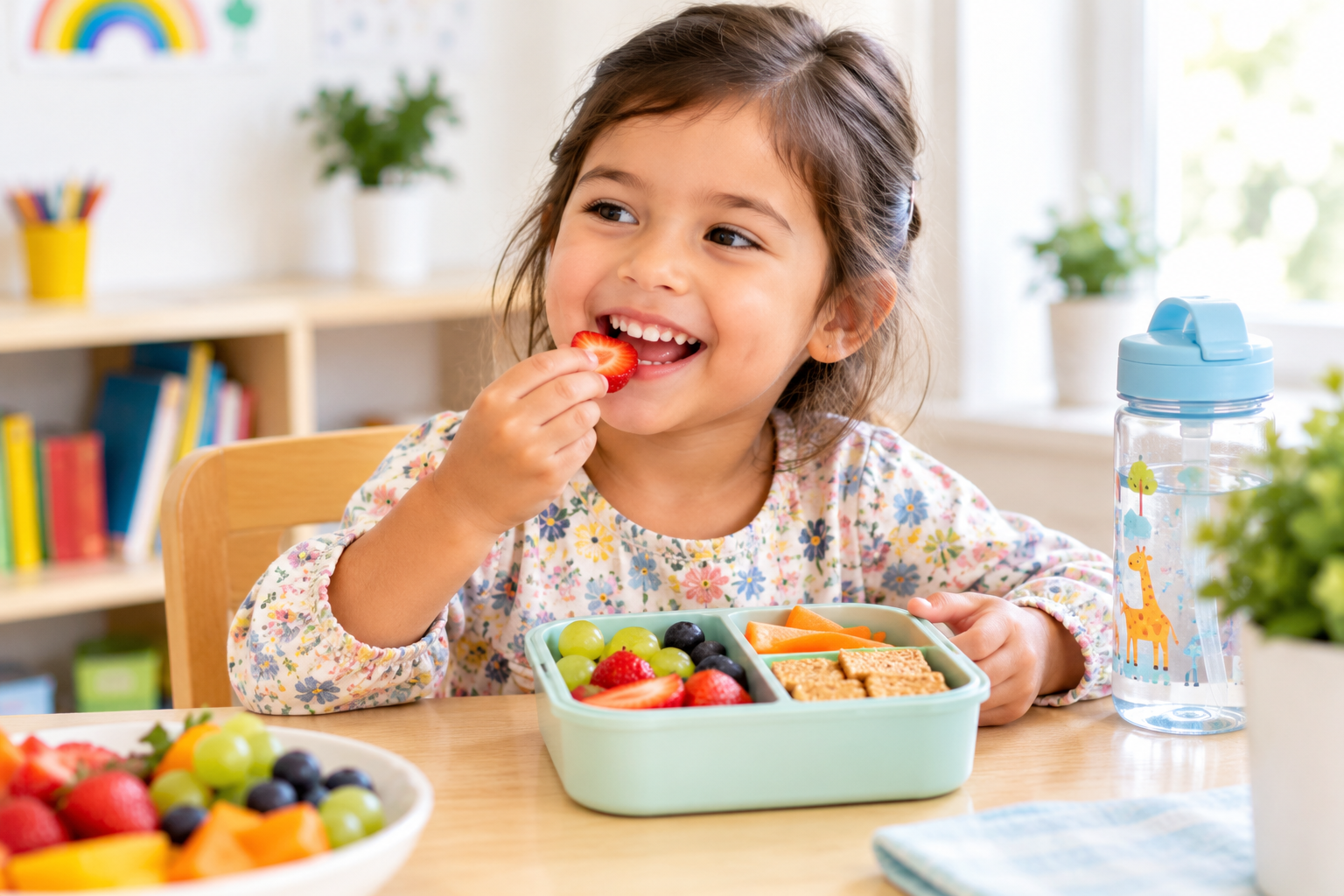
Apple slices with sunflower seed butter. Banana coins rolled in plain yogurt. Cheese cubes with whole grain crackers. Cucumber sticks with hummus. Berries in a small bowl. Hard boiled egg halves. Air popped popcorn for kids who are old enough to chew it safely.
Always cut foods like grapes, hot dogs, and raw carrots into small, safe pieces for toddlers to lower the choking risk. If you are ever unsure about a food, ask your pediatrician.
Allergies Deserve a Plan
Food allergies are more common in kids today, and any good school takes them seriously. Peanuts, milk, eggs, and tree nuts are some of the most common triggers. When you tour a school, ask how they handle allergies. Do they keep clear records for each child? Do teachers check labels and wash hands and tables before and after meals?
A strong program will have written steps in place and will talk with you openly about your child’s needs. This should feel like a team effort between you and the teachers.
Picky Eaters Are Normal
If your toddler turns down everything but pasta, take a breath. Picky eating is very common between ages two and five. Kids this age are learning to say no and test what they like.
A few things that help: offer new foods many times without pressure, since it can take ten or more tries before a child accepts something. Let kids help wash veggies or stir a bowl. Eat together when you can, because kids copy what they see. And try not to turn mealtime into a battle, since pressure often makes things worse.
Group settings can help here too. Kids tend to try new foods when they see friends enjoying them. A good toddler daycare Corte Madera program often sees little ones tasting foods at school that they refuse at home, simply because the whole table is doing it.
What to Ask When You Tour
Food is a great topic to bring up on a school visit. Ask what snacks and meals look like on a normal day. Ask whether the school provides food or whether families bring it, and what the guidelines are. Ask how they handle allergies, and how they feel about sweets and treats during birthdays and holidays.
If you are comparing programs across the Marin County preschool options in your area, you will notice that schools take very different approaches. Some provide full meals, while others ask families to pack lunches. Neither is wrong, but the right fit depends on what matters most to your family.
Make It a Team Effort
The best results come when home and school work together. Share what your child loves and what they struggle with. Ask teachers what they notice at snack time. Small details, like your child eating better when food is cut into strips, can help the whole team support them.
Healthy habits built in the early years tend to stick. A child who grows up enjoying fruit, vegetables, and real food has a head start that lasts a lifetime.
Frequently Asked Questions
1. What are good healthy snacks for toddlers?
Fruit, yogurt, cheese, whole grain crackers, and soft vegetables with a dip are all great choices. Always cut foods into safe sizes for little mouths.
2. Should I avoid artificial food dyes for my child?
Many parents choose to limit them as a precaution. If you have questions about your child’s diet, your pediatrician is the best person to talk to.
3. How do I handle a picky eater?
Offer new foods often, keep mealtimes relaxed, and let your child help in the kitchen. Most kids grow out of picky phases with time and patience.
4. How do schools manage food allergies?
Good programs keep clear allergy records, check labels, clean tables and hands, and talk openly with parents. Ask for their written steps during your tour.
5. Is it okay to give treats sometimes?
Yes. Treats are part of a happy childhood. The goal is to make healthy foods the everyday choice and keep sweets for special times.
Want to see how snack time and daily routines work in a real classroom? Book a free school tour and meet the teachers who care for your little one every day.