Why Outdoor Play Is Making a Big Comeback in Early Childhood Education
Walk past any quality preschool today and you will likely see kids outside more than you would have expected a few years ago. Mud kitchens, nature walks, and unstructured backyard time are showing up in curriculums across the country, and parents are noticing. If you have been researching childcare Corte Madera CA, you have probably seen more schools talking about outdoor time as a real part of their program, not just a break between lessons.
This shift is not random. Teachers, doctors, and researchers have been raising concerns about kids spending too much time indoors, and the response has been a real push to bring outdoor play back to the center of early education.
Why This Trend Is Picking Up Speed
Over the past few years, screen use went up and outdoor time went down for a lot of young kids. Pediatricians started noticing changes in attention span, physical coordination, and even sleep quality. At the same time, research on outdoor learning kept showing the same results again and again. Kids who spend more time outside tend to have better focus, stronger problem solving skills, and fewer behavior struggles in the classroom.
This combination is why so many schools are rebuilding their daily schedules around outdoor time instead of treating it as an afterthought.
What Outdoor Learning Actually Looks Like
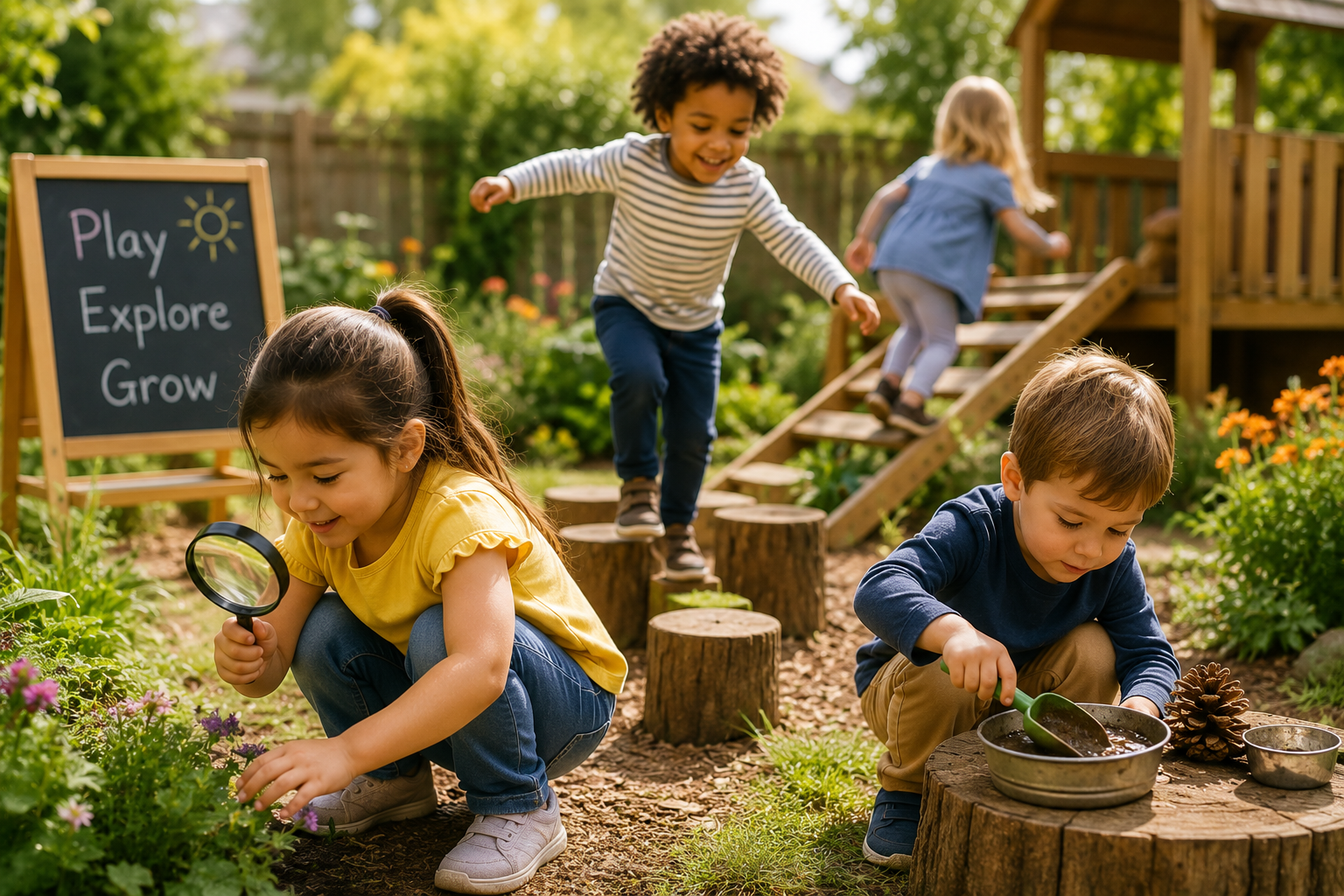
Good outdoor programs go far beyond a quick trip to the swings. Kids might dig in dirt to learn about worms and roots, count leaves during a nature walk, or build small structures out of sticks and rocks. These moments teach real skills like counting, sorting, and problem solving, just without a worksheet involved.
Unstructured play matters just as much as guided activities. Giving kids open ended time outside, without a strict plan, allows their imagination to take the lead. A group of toddlers turning a pile of leaves into a pretend soup kitchen is doing more for creativity and language development than most people realize.
The Physical Benefits Parents Often Overlook
Outdoor play builds gross motor skills in ways indoor spaces simply cannot match. Running, climbing, jumping, and balancing on uneven ground all strengthen muscles and coordination that indoor play tends to miss. This physical development also supports better focus indoors later in the day, since kids who get enough movement tend to settle into quiet activities more easily afterward.
Fresh air and natural light play a role too. Both have been linked to better mood regulation in young children, which can mean fewer meltdowns and smoother transitions throughout the day.
What to Look for in a Program
If outdoor time matters to you, ask specific questions during a school tour. How much time do kids spend outside each day. Is outdoor time built into the daily schedule year round, or only when weather is perfect. Do teachers lead nature based activities, or is outdoor time mostly free play on a playground.
A strong daycare San Diego program should treat outdoor time as a core part of the day, not an optional extra squeezed in when there is nothing else planned.
How This Connects to Toddler Development
The toddler years are especially important for building movement skills and sensory awareness. A well designed toddler program San Diego often includes daily outdoor exploration paired with simple sensory activities like sand play, water tables, or gardening. These small experiences build coordination, patience, and curiosity, all skills that carry into the classroom later on.
Simple Ways to Add More Outdoor Time at Home
You do not need a big backyard to bring more outdoor play into your child’s week. A short walk after dinner, time at a local park, or even ten minutes in the driveway with sidewalk chalk all count. Let your child get a little dirty sometimes. Puddle jumping and mud pies are not a mess to avoid, they are actual learning in disguise.
Weather does not have to be a dealbreaker either. A light jacket and some boots can turn a cloudy afternoon into a fun outdoor adventure instead of a missed opportunity.
The Bigger Picture
This return to outdoor play is really a return to basics. For generations, kids grew up climbing trees and playing in dirt without anyone calling it a program. Modern life just made that harder to come by naturally, so schools are stepping in to bring it back intentionally. The results speak for themselves, with calmer, more focused, and more curious kids showing up in classrooms that prioritize this kind of daily movement and exploration.
Frequently Asked Questions
1. How much outdoor time should young children get each day?
Many experts recommend at least sixty minutes of outdoor play daily, split across a few sessions if needed, weather permitting.
2. Does outdoor play really help with focus indoors?
Yes, physical activity outside helps regulate energy levels, which often leads to better attention and calmer behavior during indoor activities.
3. What if my child is hesitant about getting dirty or messy?
This is common and usually improves with gentle, repeated exposure. Let them explore at their own pace without pressure.
4. Can outdoor play happen safely in cold or rainy weather?
Yes, with the right clothing, short outdoor sessions in mild rain or cold can still be safe and enjoyable for most kids.
5. How can I tell if a school takes outdoor learning seriously?
Ask about their daily schedule and outdoor space. Schools that treat it as a planned, consistent part of the day usually get real results.
If outdoor learning matters to your family, book a free school tour and see our outdoor spaces and daily routines in person.