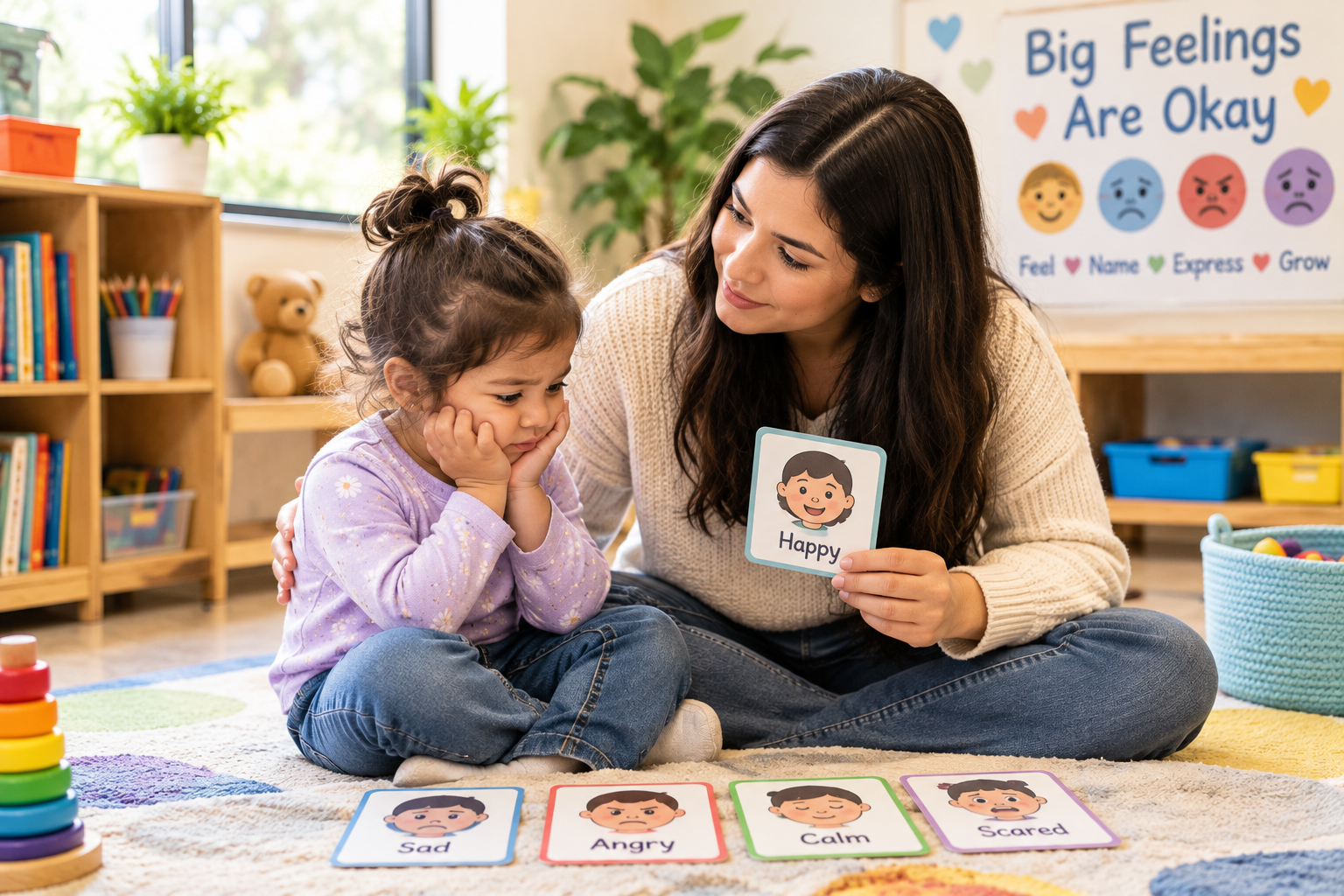
Big Feelings, Little Kids: How to Help Your Toddler Handle Emotions
Every parent knows the moment. You cut the toast the wrong way, and suddenly your toddler is on the floor crying like the world is ending. It can feel confusing, tiring, and sometimes a little embarrassing if it happens in public. The good news is that this is completely normal. Toddlers have big feelings and very small tools to manage them.
Emotional learning has become one of the hottest parenting topics this year. More parents are reading about gentle parenting, feelings charts, and calm down corners, and more schools are making emotional skills a real part of the day. If you are looking at a day care Corte Madera program for your child, it helps to know what this looks like in real life and why it matters so much.
Why Toddlers Melt Down
A toddler’s brain is still under construction. The part that helps kids stop, think, and calm down is the last part to grow. Meanwhile, the part that feels strong emotions like anger, fear, and excitement works at full speed. So when your child is upset, they are not trying to give you a hard time. They are having a hard time.
Add in hunger, tiredness, or a change in routine, and meltdowns are almost guaranteed. Knowing this can help you stay calm, which is the first step in helping your child calm down too.
Naming Feelings Comes First
Kids cannot manage a feeling they cannot name. One of the simplest and most powerful things you can do is give words to what your child is going through. Try saying, “You look sad because we have to leave the park.” Short and simple works best.
Over time, your child starts to use those words on their own. Instead of throwing a toy, they may say, “I’m mad!” That is a huge step forward, and it takes lots of practice and repeating.
Many quality programs build this into the daily routine. Teachers use feelings charts, picture books, and simple songs to help kids spot and name what they feel. A good daycare in Corte Madera will talk about feelings all day long, during play, snack time, and even when two kids want the same truck.
Calm Down Tools That Work
Once a child can name a feeling, they need something to do with it. Here are a few tools that work well for toddlers and preschoolers.
Deep breathing games. Ask your child to smell a flower and blow out a candle. It sounds silly, but it slows the body down.
A cozy corner. A small space with soft pillows, a book, and a stuffed animal gives kids a safe spot to reset. It is not a punishment. It is a place to feel better.
Movement breaks. Jumping, stretching, or squeezing a pillow can help burn off extra energy that comes with big emotions.
Hugs and quiet time. Sometimes a child just needs you close. Stay nearby, keep your voice low, and wait until the storm passes before you talk about what happened.
Why Group Settings Help
Learning to handle feelings is much easier when kids get to practice with other kids. At home, siblings and parents often step in to fix things quickly. In a classroom, children face small real life moments all day. Someone knocks over their blocks. A friend takes their turn. A favorite toy is in use.
Each of these moments is a chance to practice patience, use words, and try again. Teachers guide the process without taking over, so kids build real skills they can use for life. This is one big reason many families look for a Madera preschool that treats emotional growth as seriously as learning letters and numbers.
What to Look for When You Tour
If emotional skills matter to you, and they should, watch how teachers respond when a child gets upset. Do they stay calm and get down to the child’s eye level? Do they use kind, clear words? Do they help the child solve the problem, or just say “stop crying”?
Also, ask how the school handles hard behavior. The best programs focus on teaching, not punishing. They look for the reason behind a behavior and help the child learn a better choice next time.
Look around the room, too. Feelings posters, calm down spaces, and books about emotions are all good signs that the school takes this seriously.
Small Habits You Can Try at Home
You do not need a special program to start building emotional skills at home. A few small habits can go a long way.
Keep routines steady, and give a heads up before changes, like “Five more minutes, then we clean up.”
Offer simple choices, like the red cup or the blue cup. Small choices give kids a sense of control and cut down on power struggles.
Model calm. When you take a deep breath during a stressful moment, you show them how it is done.
Praise effort. Say, “You used your words. I’m proud of you.”
Be Patient With Yourself, Too
Some days will go smoothly, and some will not. That is okay. Progress often looks like two steps forward and one step back, and a warm home and a caring school working together make a real difference.
Frequently Asked Questions
1. At what age do toddlers start having tantrums?
Tantrums often begin around 18 months and can last until age four or so. They are a normal part of growing up and usually fade as language skills improve.
2. Is it okay to ignore a tantrum?
If your child is safe, staying calm and nearby usually works better than ignoring. Once they settle, you can talk about what happened in simple words.
3. How can a preschool help with emotional skills?
Good programs use feelings charts, stories, and daily practice with other kids. Teachers coach children through hard moments so they learn to solve problems on their own.
4. When should I be concerned about my child’s behavior?
If meltdowns are very frequent, last a long time, or seem to hurt your child or others, talk with your pediatrician or your child’s teacher for support.
5. Do calm down corners really work?
Yes, when used the right way. They should feel safe and cozy, not like a timeout. Kids learn they can take a break and reset.
Want to see how emotional learning looks in a real classroom? Book a free school tour and meet the teachers who help little ones grow, one big feeling at a time.