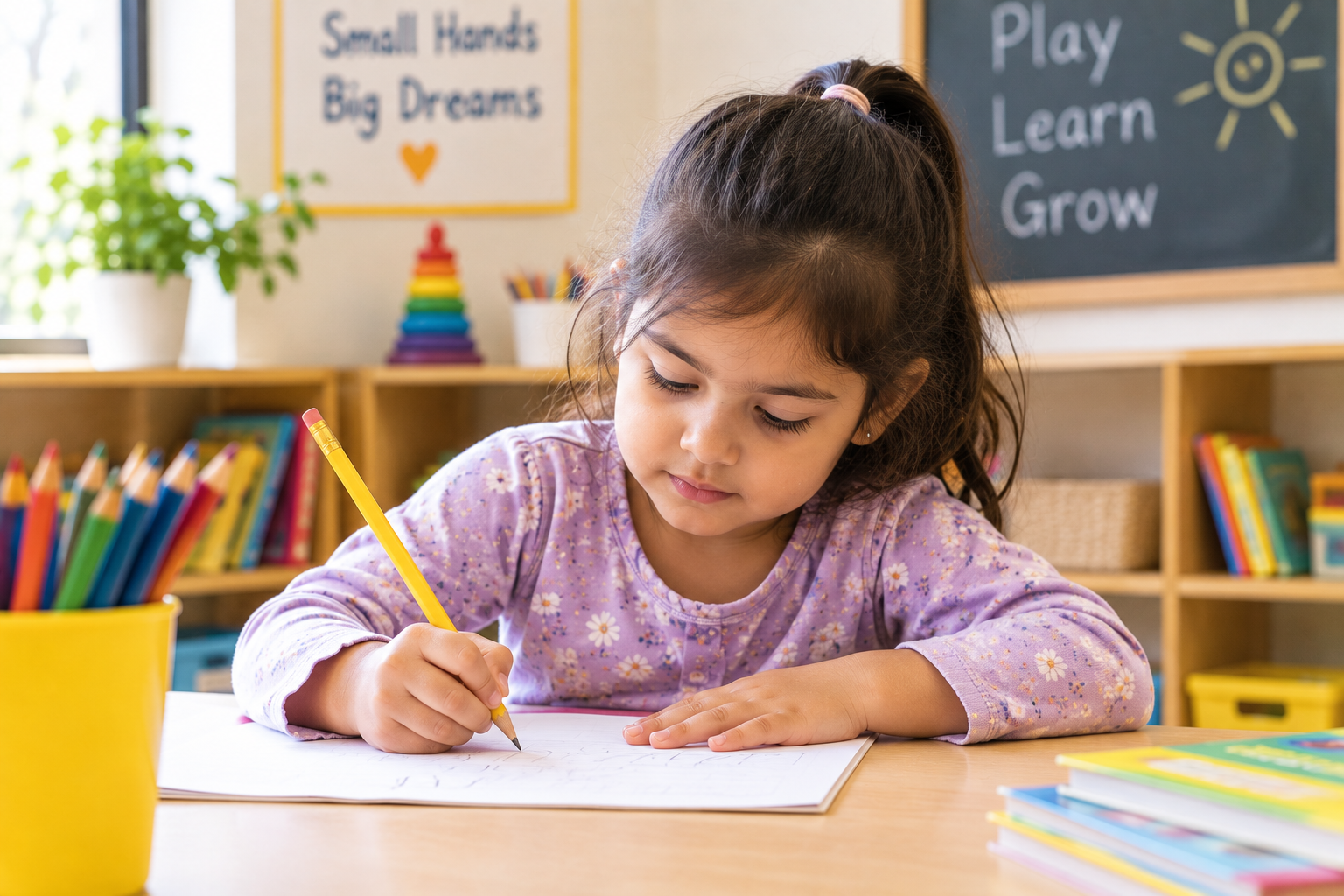
Why So Many Kids Are Struggling to Hold a Pencil
Kindergarten teachers across the country have been sharing the same concern lately. More kids are showing up on day one unable to hold a pencil correctly, cut with scissors, or even button their own coat. This might sound small, but it points to something bigger happening with fine motor development, and it has quickly become one of the most talked about topics in early education this year. If you are researching daycare Madera CA options, understanding why this is happening can help you pick a program that actually gets ahead of it.
What Is Actually Going On
Fine motor skills are the small muscle movements in the hands and fingers, the same ones needed for writing, drawing, buttoning, and zipping. These skills used to develop naturally through everyday play. Building with blocks, playing with clay, stringing beads, and even just tearing paper all strengthen these muscles over time.
The problem is that a lot of that everyday hands on play has been replaced by swiping a screen, which barely uses these muscles at all. A tablet only needs one finger tap, while a puzzle piece needs a full hand grip, wrist control, and coordination. Over time, less of that hands on practice means kids are entering school with weaker hand strength and coordination than kids had even ten years ago.
Why This Matters More Than It Seems
Weak fine motor skills do not just affect handwriting. They connect to a child’s confidence in the classroom too. A kid who struggles to color inside the lines or cut along a shape can start to feel discouraged before they even get to the academic part of school. This is exactly why so many teachers are pushing for more hands on activities earlier, before kids reach kindergarten, rather than trying to catch up once formal schoolwork begins.
How Good Early Programs Are Responding
Quality early childhood programs are leaning hard into activities that build these muscles naturally, without kids even realizing they are working on a skill. Playdough, lacing cards, tongs and tweezers games, and simple cutting practice all show up in strong classrooms on a regular basis. A good preschool Madera CA should be weaving these activities into daily routines, not just saving them for one craft time a week.
Everyday classroom tasks matter too. Pouring their own water, using a spoon to serve snack, or zipping their own backpack might look like small independence building moments, but they are actually strengthening the exact muscles kids need for writing later on.
Starting Even Before Preschool
This kind of muscle building can start much earlier than most parents realize. Toddlers benefit hugely from simple activities like stacking cups, turning pages in a board book, or using chunky crayons to scribble. A strong Corte Madera daycare program should be building these small moments into toddler classrooms too, not waiting until preschool age to introduce them.
The earlier kids get regular hands on practice, the smoother their transition into writing and more structured tasks tends to be once they reach kindergarten.
What to Look For When Touring a School
Ask how much time each day is set aside for open ended hands on play, not just screen free time in general, but actual activities using hands, fingers, and small tools. Look around the classroom for things like puzzles, building blocks, art supplies, and manipulative toys within easy reach for kids.
Ask teachers directly how they support kids who seem behind on grip strength or coordination. A program with a clear, patient approach shows they understand how much this foundation matters.
Simple Ways to Help at Home
You do not need fancy tools to build these skills. Let your child help with simple kitchen tasks like stirring or pouring. Give them playdough or clay time regularly. Offer chunky crayons or washable markers for open ended drawing. Even something as simple as letting them use child safe scissors to snip paper strips builds real strength over time.
Limiting passive screen time in favor of any kind of hands on activity, even just for twenty or thirty minutes a day, can genuinely make a difference over the course of a year.
Why This Trend Deserves Attention Now
This is not about pushing kids to write early or rushing development. It is about making sure kids get the everyday hands on practice that used to happen naturally, so their hands are ready when school asks more of them. A little intentional play now can prevent a lot of frustration later, both for kids and the teachers working with them.
Frequently Asked Questions
1. At what age should fine motor skills start developing?
Fine motor development starts in infancy with simple grasping and continues building through toddlerhood and preschool years through regular hands on play.
2. Is it normal for my toddler to struggle holding a crayon?
Yes, this is a normal part of learning. With regular practice using crayons, blocks, and similar toys, grip strength and control improve steadily over time.
3. How much does screen time really affect fine motor skills?
Excessive screen time reduces the hands on practice kids need, since swiping and tapping use very different muscles than writing, building, or cutting.
4. What activities help the most with fine motor development?
Playdough, puzzles, lacing beads, using child safe scissors, and simple pouring or stirring tasks are all excellent for building hand strength and coordination.
5. Should I worry if my child seems behind other kids their age?
Every child develops at their own pace. Consistent hands on practice usually helps kids catch up, but it is always fine to mention concerns to their teacher for extra support.
If you want to see how daily hands on activities build these skills in our classrooms, Book a free school tour and watch a typical day in action.