Is Your Child Bored at Home? How Preschool Can Make Learning Fun Every Day
Do you ever feel like your child needs more than toys, cartoons, and activities at home to stay interested? Perhaps they ask questions all day, enjoy exploring everything around them, or seem eager to play with other children. You may be wondering whether it is time to introduce a more structured learning environment.
These questions are common among parents of young children. The early years are filled with curiosity, energy, and a desire to understand how the world works. Children want to touch, build, ask questions, experiment, and discover things for themselves.
While home is an important place for learning, a thoughtfully designed preschool program can offer new experiences that encourage children to explore their interests, develop social skills, and become more confident learners.
For parents searching for a preschool in Corte Madera, understanding how children learn through play can help you decide whether preschool is the right next step for your family.
Why Do Young Children Need More Than Toys and Screen Time?
Young children are naturally curious. They may spend several minutes stacking blocks, filling containers with water, looking at picture books, or asking the same question repeatedly.
These activities may seem simple, but they help children develop important skills. Building blocks encourages problem solving. Drawing helps develop hand control. Listening to stories supports language development. Playing with other children creates opportunities to practice communication and cooperation.
Screens can provide entertainment and, in some cases, educational content. However, children also need opportunities to move, interact with people, explore real objects, and use their imagination.
A balanced daily routine includes active play, creative activities, conversation, outdoor experiences, and rest.
A quality early childhood education environment gives children opportunities to explore these activities with guidance from teachers who understand their developmental needs.
5 Ways Preschool Makes Learning More Enjoyable
1. Learning Through Play
Children often learn best when they are actively involved in an experience.
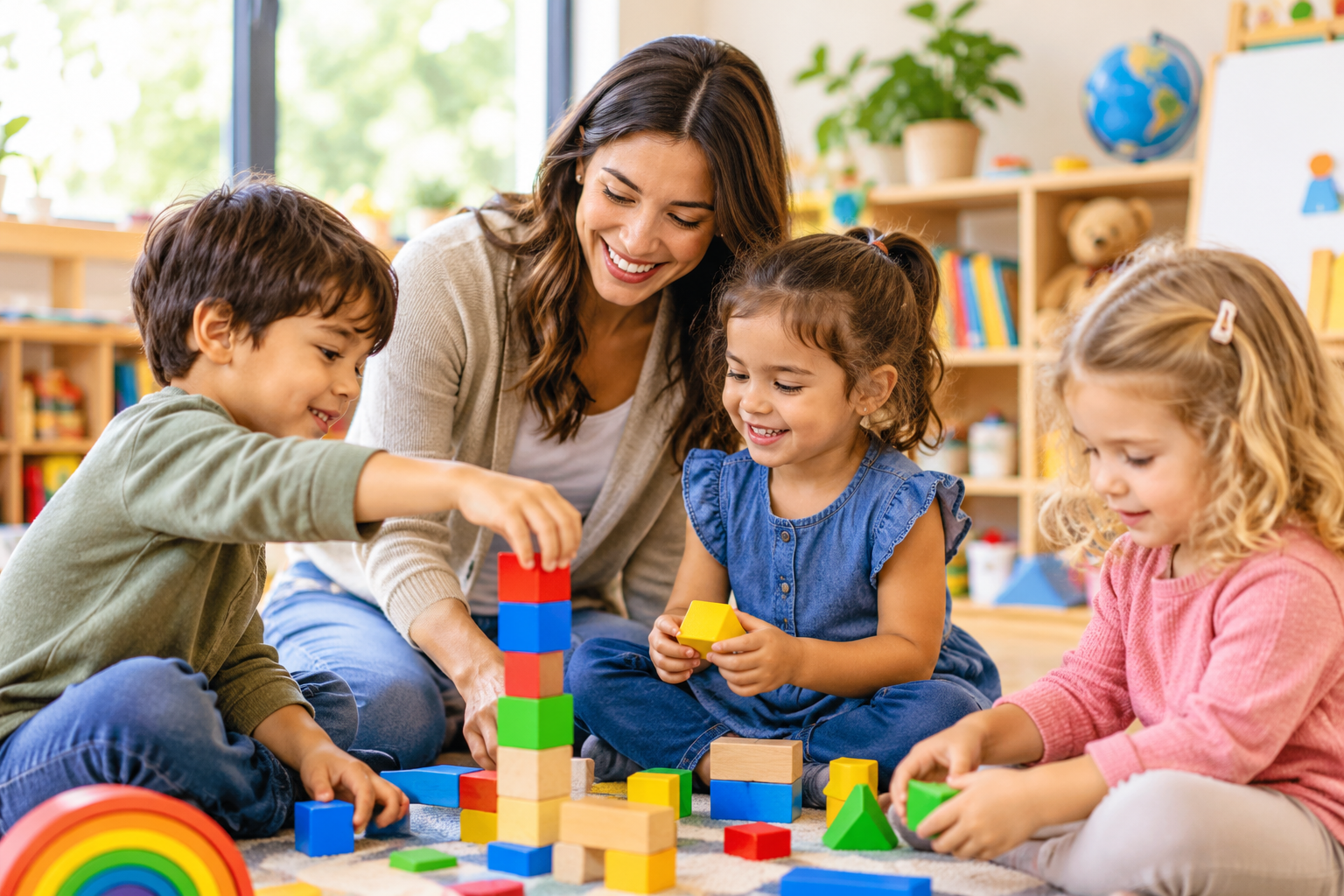
At preschool, building towers, completing puzzles, sorting objects, painting, and playing pretend can introduce early concepts without making learning feel like a formal lesson.
For example, children learn about shapes while building with blocks. They explore counting while sharing materials. They develop creativity when pretending to run a shop, prepare a meal, or care for a toy animal.
These everyday experiences encourage children to ask questions, test ideas, and learn from mistakes.
A well planned play based learning approach combines enjoyment with opportunities to develop language, thinking skills, coordination, and independence.
2. Making Friends and Learning Social Skills
Playing alongside other children creates experiences that are difficult to reproduce in exactly the same way at home.
Children learn to wait for their turn, share materials, express their preferences, and listen to different ideas. They may also discover that not everyone wants to play the same game.
These interactions can sometimes be challenging, but they provide valuable opportunities for learning.
With patient guidance from teachers, children can begin understanding how to resolve small disagreements and communicate their feelings.
Developing these social and emotional skills can help children feel more comfortable participating in group activities and forming friendships.
3. Discovering Creativity Through Art and Music
Painting, drawing, singing, dancing, and imaginative play give children different ways to express themselves.
A child who is reluctant to speak in a group may feel more comfortable participating through music or art. Another child may enjoy creating stories with toys or building imaginative structures.
Creative activities also encourage children to make choices and explore different possibilities.
The goal is not to produce perfect artwork or perform every activity correctly. It is to give children the freedom to experiment, express ideas, and enjoy the process.
4. Developing Confidence Through Everyday Achievements
Young children often feel proud when they accomplish something independently.
Putting away toys, completing a puzzle, helping prepare materials, or learning a new classroom routine can provide a sense of achievement.
Teachers can encourage these moments by offering age appropriate challenges and allowing children time to try things for themselves.
This approach supports child development by helping children become more comfortable making decisions, asking for help, and trying unfamiliar activities.
Confidence grows gradually through repeated experiences, encouragement, and opportunities to learn.
5. Preparing for Kindergarten Naturally
Preschool introduces children to experiences that can support their transition to kindergarten.
Listening to stories, recognizing patterns, exploring letters and numbers, following simple instructions, and participating in group activities help build a foundation for future learning.
Children also begin practicing classroom routines, managing their belongings, and communicating with adults outside their family.
A strong kindergarten readiness program does not require children to learn everything ahead of time. Instead, it helps them develop the confidence, curiosity, and foundational skills they will continue building in elementary school.
Finding the Right Preschool in Corte Madera
Choosing a school involves more than finding activities that keep your child busy. You want an environment where your child feels safe, teachers understand their needs, and learning is appropriate for their age.
When exploring a preschool in Corte Madera, CA, consider the following questions:
- Do teachers encourage children to ask questions and explore?
- Are creative activities, physical play, and early learning balanced throughout the day?
- How does the school help children build friendships?
- How are parents informed about their child’s progress?
- Does the daily routine suit your family’s schedule and your child’s needs?
Visiting the classroom can help you understand how teachers interact with children and how activities are organized.
Golden Poppy School in Corte Madera offers programs for different stages of early childhood, including infant care, toddler programs, preschool, Pre K, and Transitional Kindergarten.
Families can explore the school’s programs to learn more about its early learning options and identify the program that best suits their child’s age and development.
Before enrolling, contact the school to confirm program details, age requirements, schedules, and current availability.
How Can You Encourage Learning at Home?
You do not need to turn your home into a classroom to encourage curiosity. Everyday experiences provide plenty of opportunities for children to learn.
Read a story together and ask your child what they think might happen next. Let them help sort laundry by color or count pieces of fruit while preparing a snack. Build something with blocks and see whether they can create a taller or wider structure.
Spend time outdoors observing leaves, birds, clouds, and insects. Ask open ended questions that encourage your child to describe what they notice.
Allow unstructured play as well. Children need time to follow their interests without an adult directing every moment.
These small experiences support early learning at home while helping children develop language, creativity, problem solving, and a stronger connection with their families.
Frequently Asked Questions
1. How do I know if my child is ready for preschool?
Your child may show interest in new activities, enjoy exploring their surroundings, or benefit from more opportunities to interact with other children. Readiness varies, and children do not need to master every skill before enrollment.
2. What do children learn in preschool?
Preschool can support early language and literacy, basic mathematical concepts, creativity, physical coordination, social skills, emotional development, and independence through age appropriate activities.
3. Is play based learning effective for young children?
Yes. Play can help children explore ideas, practice communication, develop problem solving skills, and understand new concepts. Effective programs combine play with thoughtful guidance from teachers.
4. What should I look for when choosing a preschool in Corte Madera?
Look for caring teachers, a safe and engaging classroom, age appropriate activities, a predictable daily routine, and clear communication with parents. A school visit can help you determine whether the environment feels right for your child.
5. Does Golden Poppy School offer programs for different ages?
Golden Poppy School lists infant, toddler, preschool, Pre K, and Transitional Kindergarten programs. Contact the school directly to confirm the age range and availability of each program.
Give Your Child More Opportunities to Explore
Children do not need constant entertainment or structured lessons to learn. They need time to play, ask questions, develop relationships, and discover what interests them.
Preschool can provide a valuable environment for these experiences while helping children build skills that support their future education.
If you are looking for preschool in Corte Madera, explore Golden Poppy School to learn more about its programs and early learning environment.
Visit the Golden Poppy School website to explore available programs and take the next step toward finding a suitable learning environment for your child.